
- Apple Enters the Foldable Era: iPhone Duo Bets $1,999 on Changing the Smartphone Market
Apple has finally entered the foldable smartphone market, but its strategy is about much more than launching another new phone. With the new iPhone Duo, Apple is betting that its enormous iPhone ecosystem, premium customer base and tightly integrated hardware-software experience can turn foldables from a niche category into a mainstream premium product.
The company unveiled the iPhone Duo, its first foldable iPhone, at its September 9, 2026 event. The device starts at $1,999 globally and ₹2,99,900 in India, placing it firmly in the ultra-premium smartphone segment.
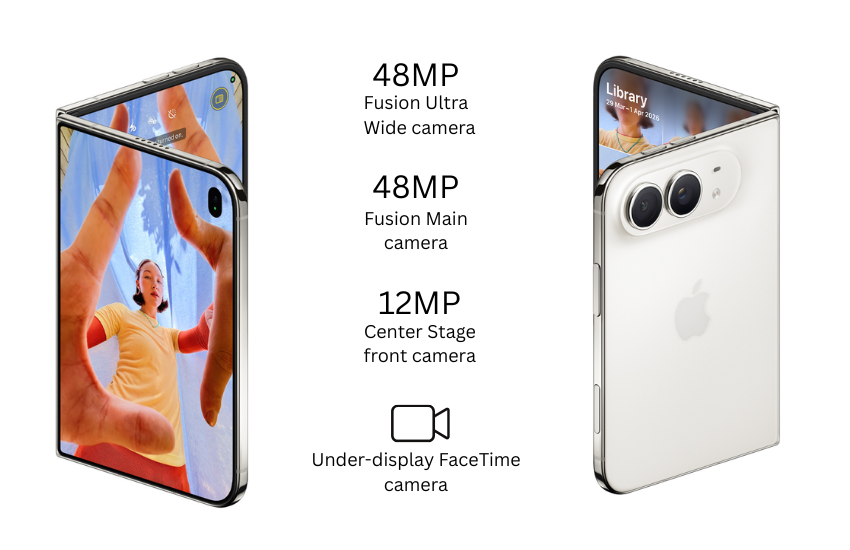
Apple also introduced the iPhone 18 Pro and iPhone 18 Pro Max, along with the Apple Watch Series 12, Apple Watch Ultra 4 and AirPods 5, making the event one of the company’s most significant product launches in recent years.
iPhone Duo: Apple’s Biggest iPhone Design Change in Years
The biggest announcement of the event was undoubtedly the iPhone Duo.
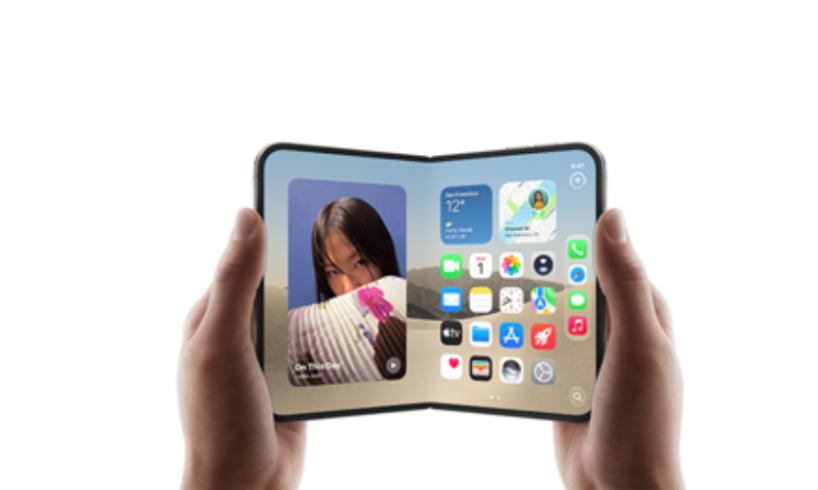
Designed around a passport-like foldable form factor, the device opens to reveal a 7.6-inch internal display, while a 5.4-inch external screen allows it to function as a conventional smartphone when folded.
Apple has focused heavily on the engineering behind the device, particularly the hinge, thinness and ability to use the phone in different partially folded positions.
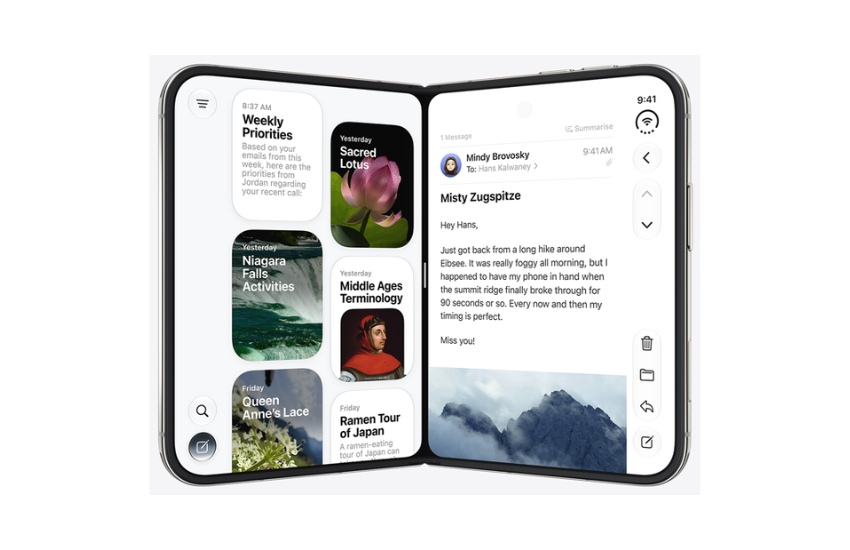
The larger internal screen also enables a more tablet-like experience, including the ability to keep two apps open simultaneously. The device supports the Apple Pencil and includes Touch ID integrated into the side button.
The iPhone Duo starts with 256GB of storage, while Apple offers configurations going as high as 2TB, giving the foldable a storage advantage over some competing devices.
Why Is Apple Entering Foldables So Late?
Samsung and Chinese smartphone manufacturers have been experimenting with foldable phones for years.
So why did Apple wait?
The answer may lie in Apple’s traditional product strategy.
Rather than being the company that introduces a completely new category first, Apple has often entered markets after the technology has matured and consumers have demonstrated that there is a viable market.
The foldable smartphone category has already gone through several generations of experimentation involving hinge durability, screen technology, software optimisation and device thickness.
Apple can therefore enter a market where many of the early problems have already been identified.
Economic Times quoted analysts who argued that Apple’s late arrival could actually work in its favour. Instead of spending years convincing consumers why foldable phones matter, Apple can introduce the form factor to hundreds of millions of existing iPhone users.
That could prove more important than simply competing for existing foldable-phone customers.
Apple Doesn’t Have to Build the Market From Zero
This is perhaps the most important part of the iPhone Duo story.
A company entering a new technology category usually has two problems:
- Build the product.
- Convince consumers that they need it.
Apple already has an enormous installed base of iPhone users.
For many existing Apple customers, the Duo can therefore be positioned not as an unfamiliar technology but as the next possible evolution of the iPhone.
That changes the economics of entering the category.
Instead of asking consumers to switch ecosystems, Apple can potentially persuade existing iPhone owners to upgrade to a different form factor.
Analysts cited by Economic Times believe Apple’s entry could increase consumer awareness and confidence in foldable smartphones, although Samsung is expected to retain a strong position in the near term because of its established portfolio and early-mover advantage.
A $1,999 Price Tag Sends a Message
The iPhone Duo starts at $1,999, while its Indian starting price is ₹2,99,900.
That makes it Apple’s most expensive iPhone, but the pricing also appears to be part of the company’s larger strategy.
The phone is undeniably expensive, yet expectations before the launch had suggested that Apple’s first foldable could cost even more.
At $1,999, Apple has entered the ultra-premium foldable market without pushing the starting price dramatically beyond the category’s established range.
Reuters reported that the Duo’s starting price is around $100 higher than comparable base-storage versions of Samsung’s Galaxy Z Fold8 and Google’s Pixel 11 Pro Fold.
For Apple, the objective may not be to sell the largest number of smartphones.
Instead, the Duo can help Apple create a new premium revenue stream while strengthening the value of the wider iPhone ecosystem.
Apple Is Betting on the Ecosystem, Not Just the Hardware
The foldable market is ultimately not only about screens and hinges.
Apple’s advantage could come from the combination of hardware, software and services.
The iPhone Duo has been designed around Apple’s latest software experience, including multitasking capabilities intended to make better use of the larger display.
Apple is also placing greater emphasis on artificial intelligence.
The new generation of Apple Intelligence and Siri is being positioned as part of a broader vision in which the iPhone becomes an “intelligent personal hub.”
Apple says AI processing will take place on the device whenever possible, while more demanding tasks can use its Private Cloud Compute infrastructure. Siri AI is also being expanded to work across more than 300,000 apps.
That means Apple’s foldable strategy is not simply about creating a bigger screen.
It is about combining a new form factor with the company’s broader ecosystem.
China Could Become a Major Battleground
One of the biggest opportunities for Apple may exist outside the United States.
China is already one of the world’s important foldable-phone markets, but Apple has not previously had a foldable product to compete with established Chinese brands.
Economic Times reported that Huawei held nearly 80% of China’s foldable market in the second quarter of 2026, according to IDC data cited in the report.
The iPhone Duo gives Apple a new product with which to compete in this premium segment.
However, China also presents a difficult challenge because domestic brands have already built strong positions in foldables and have considerable experience with the form factor.
Apple’s ecosystem may help, but the competition will be far more intense than simply launching a new product into an uncontested market.
Can Apple Become the Foldable Market Leader?
Apple’s ambitions appear significant.
IDC expects Apple to ship around 10 million iPhone Duo units during its first 12 months, potentially generating approximately $27 billion in revenue.
The research firm also expects Apple to become the largest foldable smartphone vendor in 2027.
Those numbers would represent a major shift in the category.
But becoming the largest foldable vendor will not happen automatically.
Samsung already has years of experience in foldables, while Chinese manufacturers including Huawei and others have developed their own designs and technologies.
Apple’s challenge will be to convince consumers that the Duo offers enough value to justify its extremely high price.
iPhone 18 Pro and Pro Max: The Conventional Flagships Get More Powerful
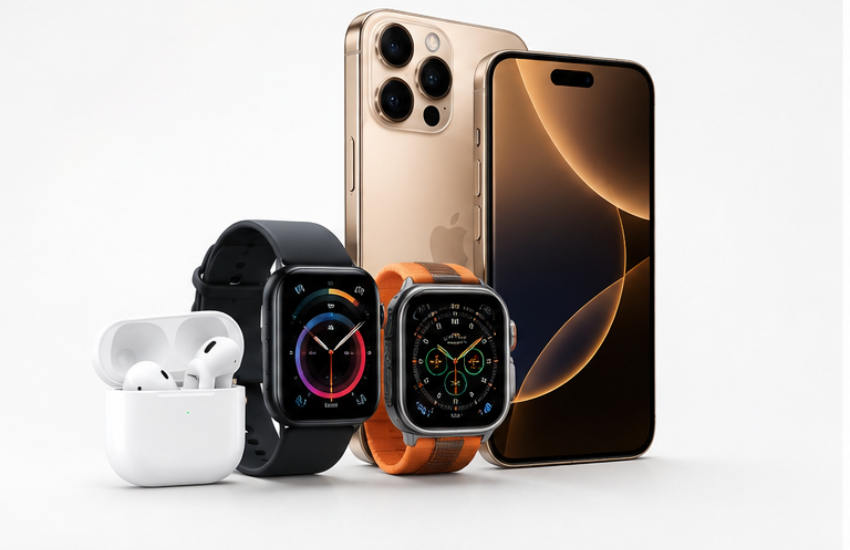
The foldable iPhone may have stolen the spotlight, but Apple also upgraded its conventional flagship range.
The iPhone 18 Pro and iPhone 18 Pro Max are powered by Apple’s new A20 Pro chip and bring significant camera and performance improvements.
One of the major camera upgrades is a new 48-megapixel main camera with variable aperture technology, designed to provide greater control over lighting and depth of field.
The Pro models also introduce Apple’s Reference Image standard, aimed at helping establish the authenticity and origin of images. Support for SynthID is also being introduced to help identify AI-generated or AI-edited images.
However, Apple said these image-authentication features will not be available in the European Union or China.
The iPhone 18 Pro starts at ₹1,64,900 in India, while the iPhone 18 Pro Max starts at ₹1,79,900. Pre-orders in India begin September 12, with sales starting September 18.
Apple Watch Series 12 and Ultra 4 Add More Health Intelligence
Apple’s wearable portfolio also received significant upgrades.
The company introduced the Apple Watch Series 12 and Apple Watch Ultra 4, both featuring a new generation of health-sensing capabilities and the S11 chip.
The Series 12 starts at $399, while the Ultra 4 starts at $799.
Among the new features are a Readiness score, more frequent heart-rate monitoring and additional health insights powered by Apple Intelligence.
Apple is also bringing new audio-intelligence features, including tools such as Live Rewind and Siri Recap.
The direction is clear: Apple increasingly wants the Watch to function not merely as a notification device, but as a more intelligent health and personal-assistance platform.
AirPods 5 Bring Active Noise Cancellation to the Entry Level
Apple also introduced AirPods 5, with active noise cancellation becoming available in the entry-level AirPods line.
The new AirPods start at $129, while a $149 version adds wireless charging and stem-based volume controls.
The move is strategically important because it expands premium audio features into a lower price point within Apple’s own ecosystem.
The Bigger Question: Is Apple Changing Foldables or Just Joining Them?
The iPhone Duo’s importance may ultimately have little to do with how many units Apple sells during its first year.
The bigger question is whether Apple’s entry can change consumer perception of foldable phones.
Until now, foldables have largely remained a premium niche.
Apple has the ability to bring the category to a much larger audience because it already has a global ecosystem, a powerful retail network, strong brand loyalty and millions of consumers who upgrade within the iPhone family.
If the Duo succeeds, competing smartphone companies may be forced to rethink not just their foldable designs but also their pricing, software and ecosystem strategies.
In that sense, Apple’s biggest impact may not be taking customers away from Samsung or Huawei.
It may be making more consumers want a foldable phone in the first place.
Apple’s Foldable Bet Goes Beyond One Phone
The iPhone Duo is arriving years after the first wave of foldable smartphones, but Apple’s timing could prove strategically useful.
The company has entered after competitors have spent years developing the category, while Apple can now use the strength of the iPhone ecosystem to accelerate adoption.
The risk, however, is equally clear.
At nearly ₹3 lakh in India, the Duo is not a mainstream smartphone. It is a premium experiment aimed at consumers willing to pay heavily for a new form factor.
Whether Apple has created the next major evolution of the iPhone or simply a very expensive niche product will depend on consumer demand over the next few years.
For now, one thing is certain: the foldable smartphone market has entered a new phase—and Apple wants to define what comes next.
Key Takeaway
Apple may be late to foldables, but it is entering with something its rivals did not have when they started: an enormous existing ecosystem of loyal smartphone users.
That could make the iPhone Duo less of a catch-up product and more of an attempt to turn foldables into the next major premium smartphone category.
Also read: When AI Interviews You: Is Your Resume Still Enough?