

Can AI Replace Doctors? The Reality Behind the Technology
Artificial Intelligence is transforming healthcare, but can it truly replace the expertise, empathy, and judgment of medical professionals?
By YD NEWS Editorial Team
Artificial Intelligence (AI) is no longer a futuristic concept confined to research laboratories or science fiction. It has entered hospitals, clinics, diagnostic centres, and even smartphones, assisting healthcare professionals in ways that were unimaginable just a decade ago.
From analysing medical images and predicting disease risks to automating administrative tasks and supporting clinical decision-making, AI is steadily becoming part of modern healthcare.
This rapid advancement has also raised an important question:
Can AI replace doctors?
The answer is both simple and nuanced.
No – AI is not here to replace doctors. But it is changing how doctors practice medicine.
The Rise of AI in Healthcare
Healthcare generates enormous volumes of data every day, including medical records, laboratory reports, imaging scans, prescriptions, and patient histories. Processing this information quickly and accurately is becoming increasingly challenging for healthcare systems worldwide.
Artificial Intelligence helps by analysing large datasets within seconds, identifying patterns, and providing decision support that enables healthcare professionals to work more efficiently.
Rather than functioning as an independent decision-maker, AI serves as a powerful clinical support tool that enhances medical practice while allowing doctors to focus on patient care.
Where AI Is Already Making a Difference

Across the healthcare ecosystem, AI is being integrated into several critical areas.
Medical Imaging
AI-powered systems can assist radiologists by highlighting suspicious abnormalities in X-rays, CT scans, MRI scans, and mammograms. These systems help prioritize urgent cases and support faster reporting, particularly in high-volume hospitals.
Disease Prediction
Machine learning models can analyse patient history, laboratory results, and vital signs to identify individuals who may be at higher risk of complications such as sepsis, diabetes progression, or cardiovascular disease.
This enables earlier intervention and more proactive care.
Hospital Operations
Beyond clinical care, AI is helping hospitals improve operational efficiency through appointment scheduling, documentation, medical coding, billing assistance, inventory management, and workflow optimisation.
By reducing administrative burden, healthcare professionals can dedicate more time to their patients.
Telemedicine and Remote Monitoring
Virtual consultations are increasingly supported by AI-driven symptom assessment, patient triage, and remote monitoring tools that help clinicians follow patients beyond hospital walls.
What AI Still Cannot Do
Despite its remarkable capabilities, Artificial Intelligence has important limitations.
Medicine is far more than analysing data or recognising patterns.
Every patient is unique.
Clinical decisions often involve uncertainty, incomplete information, ethical considerations, family dynamics, emotional support, and complex human interactions that cannot be reduced to algorithms.
AI cannot genuinely understand a patient’s fears before surgery.
It cannot comfort anxious family members during critical moments.
It cannot build trust through years of compassionate care.
Nor can it assume legal and ethical responsibility for clinical decisions.
These remain the defining strengths of healthcare professionals.
The Human Side of Medicine
One of the greatest misconceptions surrounding AI is that healthcare is purely a technical profession.
In reality, medicine is deeply human.
A physician combines scientific knowledge with clinical experience, communication skills, ethical reasoning, and empathy.
When multiple treatment options exist, choosing the best course of action often requires understanding the patient’s lifestyle, financial situation, personal values, and long-term goals.
These are decisions that extend beyond data analysis.
AI can recommend.
Doctors decide.
AI as a Clinical Partner – Not a Competitor
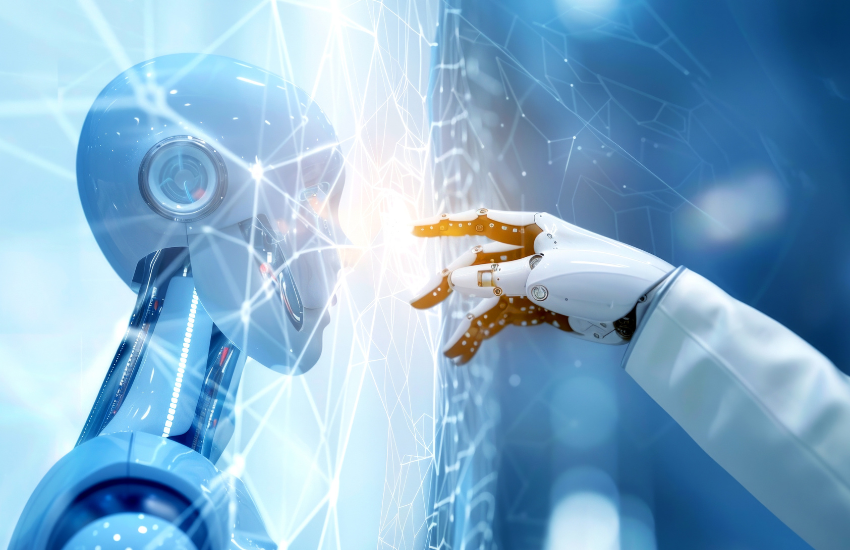
Rather than replacing doctors, AI is increasingly becoming a trusted partner in healthcare.
Imagine a physician who begins a consultation with instant access to summarised patient history, relevant clinical guidelines, potential drug interactions, and AI-assisted interpretation of diagnostic reports.
Instead of spending valuable time searching through records, the doctor can focus on listening, examining, and treating the patient.
In this model, AI enhances productivity without replacing professional expertise.
The future belongs not to AI versus doctors, but to AI working alongside doctors.
Challenges That Healthcare Leaders Must Address
The adoption of AI also brings significant responsibilities.
Healthcare organisations must carefully address several important issues before implementing AI solutions at scale.
These include:
- Protecting patient privacy and sensitive health data.
- Ensuring cybersecurity against digital threats.
- Validating AI systems through rigorous clinical evaluation.
- Preventing bias caused by incomplete or unrepresentative datasets.
- Maintaining transparency in AI-assisted clinical decisions.
- Training healthcare professionals to use AI responsibly.
Technology should strengthen trust in healthcare, not weaken it.
What This Means for Hospitals and Clinics
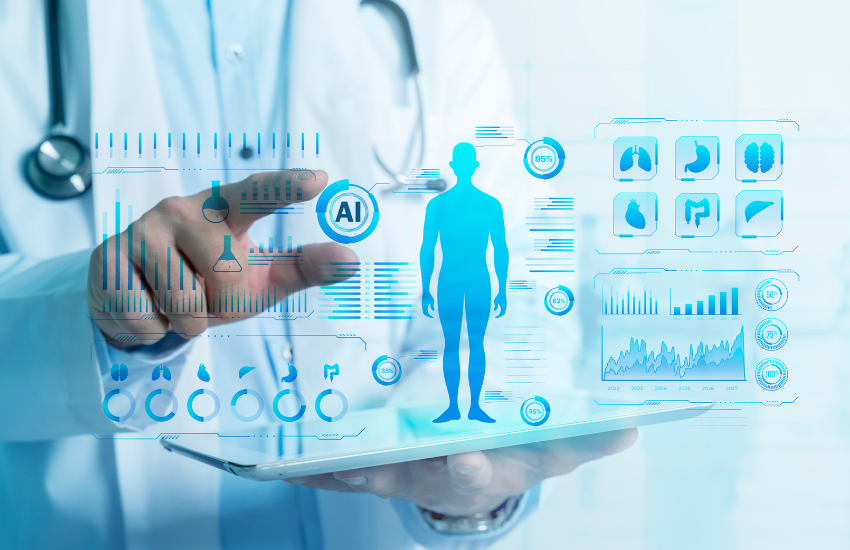
For hospital administrators and healthcare leaders, AI should not be viewed simply as another technology investment.
Instead, the focus should be on solving real operational and clinical challenges.
Questions worth asking include:
- Can AI reduce reporting turnaround time?
- Can it improve patient experience?
- Can it reduce physician burnout caused by excessive documentation?
- Can it optimise hospital operations without compromising quality of care?
- Can it help clinicians make faster and more informed decisions?
The institutions that succeed will not necessarily be those that adopt the most AI, but those that adopt it thoughtfully and responsibly.
The Road Ahead
The discussion should no longer be centred on whether Artificial Intelligence will replace doctors. A far more important question is how AI can help healthcare professionals deliver safer, faster, and more personalised patient care.
India’s healthcare ecosystem is entering a new era shaped by digital transformation, growing patient expectations, and rapid technological innovation.
Artificial Intelligence will undoubtedly play a major role in this evolution.
Yet the future of healthcare will continue to depend on the qualities that define exceptional medical practice, knowledge, ethics, empathy, compassion, and clinical judgment.
Technology can process information at extraordinary speed.
Only healthcare professionals can transform that information into trusted care.
Doctors and AI: The Future Is Collaboration
The debate should no longer be framed as “Can AI replace doctors?”
A more meaningful question is:
How can AI empower doctors to deliver better healthcare?
Artificial Intelligence has the potential to reduce administrative burden, support faster diagnosis, improve operational efficiency, and strengthen clinical decision-making.
However, healing extends beyond technology.
Patients seek reassurance, empathy, ethical guidance, and trust—qualities that no algorithm can replicate.
The future of healthcare will not belong to Artificial Intelligence alone.
It will belong to doctors who embrace AI as a tool to deliver smarter, safer, and more compassionate patient care.
Editor’s Perspective | YD NEWS
Healthcare has always evolved through innovation, from the stethoscope and X-ray to robotic surgery and digital health records. Artificial Intelligence represents the next step in that journey.
Its greatest promise lies not in replacing doctors, but in giving them more time, better insights, and stronger tools to care for patients. As AI continues to advance, the true measure of success will be how effectively technology and human expertise work together to improve lives.
Also read: Kailash Deepak Hospital Celebrates Courage and Hope with ‘Ehsaas’ on World Cancer Day